Kond, one of Yerevan’s oldest neighborhoods, emerged through continuous adaptation to the natural landscape.
Kond, one of Yerevan’s oldest neighborhoods, emerged through continuous adaptation to the natural landscape. Situated on a hill overlooking the Hrazdan River gorge, its built environment came to be in close relation to the topography, natural water flows, and terraced slopes. Houses and pathways, courtyards and gardens grew gradually, shaped by necessity, mutual care, and everyday negotiation with the terrain. This form of place-making reflects what the Cultural and Social Narratives Laboratory (CSN Lab) describes as networking architecture, where natural conditions, social relations, and spatial forms evolve together.



This natural history extends beyond the physical geography. It also includes the social and cultural networks formed in response to the area’s natural features. Shared gardens, vernacular building practices, informal gathering places, and water spaces such as wells that function as community spaces reveal an alternative model of urban development that is ecological, collective, and deeply embedded in place. Over the past century, these ecologies have been disrupted by Soviet planning and contemporary gentrification, which have fragmented the neighborhood, erased natural elements, and reshaped its social fabric.
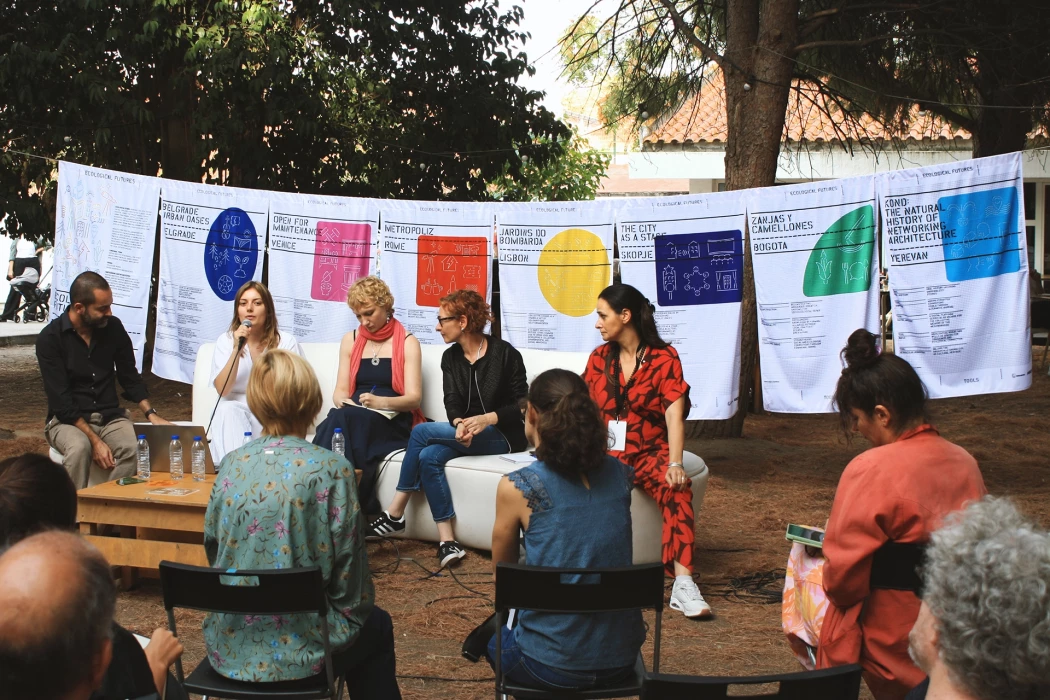
Kond: The Natural History of Networking Architecture by the CSN Lab examines these intertwined natural, urban, and social layers. Through cultural analysis, spatial research, and memory studies, the project challenges dominant narratives of underdevelopment or failed urbanization, offering instead a decolonial and ecological reading of the neighborhood.